May 24, 2009

Taking Out The Trash - "Jews did 9/11"

I know of no credible evidence whatsoever linking anyone who is Jewish to the attacks on 9/11. Neither have I seen any highly convincing evidence that Israelis played a significant role. And yet you can't do a search for information on the subject of the attack without running into websites, videos, blogs, and books suggesting that Israel, the Jews, or a global Zionist conspiracy was responsible.

The quality of discussion on these topics certainly varies from intentional disinformation to those who honestly while, in my opinion, misguidedly feel that certain topics are worthy of long term academic review or broad public attention. The quality of fact varies just as much. At one extreme we have bigotry and at the other very fact based interest in the actions of the Mossad. Both are a small minority relative to movement participants and the wider public that this movement wants to reach. So it's important for us to be clear with ourselves and with one another about where we draw certain moral and strategic lines.

Disinformation

There is no doubt in my mind that a good deal of the anti-Semitism one can find at the fringes of the movement is intentional disruption. I make this claim based first on knowing that our government is investigating and infiltrating anti-war groups far less challenging to the system than we can be, and second that anti-Semitism has been quite effectively used to undermine our credibility and would therefore be an obvious way to do further damage. Eric Williams and his role in undermining the Arizona Conference is a telling example.

From my own perspective Eric Williams came out of no where and published a series of books about deep politics on topics such as 9/11 and 7/7. After having established some measure of credibility in the movement he took on a role coordinating a 9/11 truth conference in Arizona with other sincere movement activists. Then, just a few weeks before the conference, he published a book about Holocaust denial. The result was highly damaging to the event, those involved, and the movement itself. I have little doubt that Williams meant to undermine the movement. And I sincerely hope that's not true. I haven't heard much about him since.

Bigotry

Of course, a good deal of the anti-Semitism we find is simply home grown bigotry. Between %15 and %20 of the U.S. population have strong anti-Semitic views. And that's based on self reporting which necessarily involves a fair amount of dishonest response. The numbers are significantly higher in other Western countries.

For that reason we should expect to find those with anti-Semitic views in most social groups unrelated to Jewish culture. And if that is the case, it is certainly unfair to point to that overly vocal minority in this movement and suggest that it represents our cause. To do so would demonstrate a good deal of bias toward the movement as one could point that finger at just about any other group.

The point here is that, yes, there are people with anti-Semitic views who also concern themselves with 9/11 truth. But to suggest that these people in any way represent the movement is totally unjustified relative to the great majority of us who find these views abhorrent.

Essential facts?

The final group are those who have done research into the potential role of Israeli intelligence in the 9/11 attacks. There certainly are legitimate facts that support such speculation. And it would be irresponsible to suggest that critique of Israel itself is anti-Semitic. Academic freedom is an essential priority to me. And yet if those facts don't add up to much while they allow for significant misunderstanding a good deal of caution is necessary.

I'm going to go out on a limb here and state a controversial opinion of mine. I believe that much, and certainly not all, of this "honest research" is founded is subtle forms of anti-Semitism. It's not what those involved would ever consider any kind of overt hatred. To put it as plainly as possible, it's comes down to not caring how Jewish people might feel about how information, speculation and opinion is presented. You might call it a cultural insensitivity.

I'm not talking about avoiding the truth because it would hurt someones feelings. But I simply can't find logical cause to focus much attention on a concern that offers the movement very little benefit while potentially insulting those who would otherwise support our cause.

I am NOT saying that everyone curious about this or concerned for a time with exploring the details is a bigot. I'm saying, based on the lack of strong evidence, that extended focus on the issue and its public promotion play into the hands of those who would like to undermine the movement, has the potential to alienate an entire cultural group from the movement, and is therefore not justified merely based on claims of academic rigor.

So this is more than anything else, and as always, about sticking to promoting the best facts we have. Sincere research into the potential role of Israel can certainly be conducted in a culturally sensitive manner. And yet that research does not appear to be very important to the movement's progress while certainly presenting some serious problems.

May 16, 2009

Wasted Time - Citizen Investigation Team

I have fully reviewed the eyewitness testimony, videos, and other contents of the Citizens Investigation Team website. I've had a very extended online debate with Craig Ranke about his work. I have heard the opinions of many who support the efforts of the organization. And I have come to a conclusion.

CIT offers the movement no significant benefit and in fact does a great deal of damage.

Now it's not my intention here to retread all the reasons for my having reached that conclusion. That would be a waste of our time as most of those reasons are clarified elsewhere. Reasons that are recognized by a large number of the most thoughtful and committed of movement veterans.

Instead I want to convey my direct experience of having seen CIT create an unproductive distraction that wastes people's time and undermines our ability to recruit new participants and maintain our optimism.

Public distraction

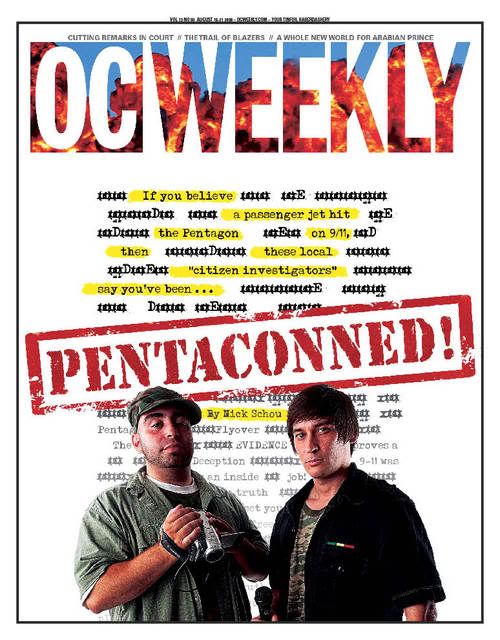
Since the release of their online video "The Pentacon," CIT has continued to garner a fair amount of attention. That's particularly true when you compare how much more attention they have received than more factual resources such as "The Truth and Lies of 9/11." And with the support of various movement figures CIT has become a lot better known than the quality of their work would otherwise merit.

As a result, those newly investigating the problems with the official story are more easily lead away from the solid facts and distracted by speculation. And that speculation gives people who don't support our efforts even more reason to dismiss the solid facts we promote. That has been particularly evident to me during street action when the first thing out of people's mouths is, "So you are those people who think no plane hit the Pentagon." With such a bias in place those people are far less likely to explore the evidence.

The prominence of poorly founded speculation can also lead to new participants getting overloaded and confused. With all of the 9/11 truth media available it's very challenging for the uninitiated to get their head wrapped around what is and is not worth their attention. For that reason any prominent promotion of poorly founded speculation can really undermine our ability to recruit and retain new participants.

Movement distraction

While we might not expect the average person to get that far into analyzing or debating what CIT presents, those in the movement who hope to have a broad view of it's nature or who are invested as I am in upholding certain standards are more likely to research the matter, think about it's merits, and talk about it with others.

That is certainly productive to a point. As I said above, I took the time to examine the information presented by CIT. I wanted to determine it's merits and weaknesses so that I could share that with others. That in itself is no waste of time. You can't support what's good or counter what is bad without knowing about it first.

However, there is a threshold of time invested beyond which further discussion is very definitely unproductive. And I've passed it many times. As much as I enjoy discussion forums and e-mail, arguing in circles for hours is not a worthwhile endeavor. I feel fairly guilty when I consider how many hours I've wasted arguing with people unwilling to change their mind in any way. I could have been doing something more beneficial for the movement.

I've had my share of interaction with Craig Ranke, Aldo Marquis, and others, who have argued in a similarly inflexible manner. They are totally sold on the merits of CIT's work. Arguments with Ranke were circular, only superficially rational, filled with subtle manipulation, and ultimately totally without much benefit to either of us.

I feel the same is true for much of the discussion that goes on in the movement on this topic. As I don't believe that the eyewitness testimony is of any great importance when compared to better established facts, I am very concerned that the movement not be wasting time the way I have on this matter. We really do have more important things to be concerned with.

Personal distraction

Finally, and related to the concerns above, are we letting our ego get involved? Are we thinking about how to win an argument when we should be concerned with other things? Are we allowing ourselves to be baited into wasting our time? Or arguing because it's something to do? Are we having a debate because we are bored?

This movement requires a certain amount of personal discipline. I've certainly been guilty of all of the above. I understand that our feelings and ego and personality can't be totally disassociated from these concerns. Pursuit of 9/11 truth is a very personal experience in some ways. And yet the scope of the movement is international. The goals are based on fundamental principles of justice. And the stakes are really high.

We have to be able to see past ourselves as we involve ourselves in this concern. We have to be able to shelve our personal desires from time to time for the sake of what is best for others. There aren't nearly enough people truly committed to this movement. We need everyone who is to try their best to keep their wits about them and stay focused on the big picture. We need to keep asking ourselves if what we are doing is good for us or for the movement. Hopefully both. But that's not always the case.

Ultimately I'm suggesting that we should all simply take CIT for what it's worth. Even if you happen to support their research I hope you will agree that there are more important lines of inquiry in the movement and more important things for us to be promoting. Don't allow a speculative concerns to dominate your time, energy, or concern for this movement.

May 10, 2009

Avoiding Burnout - Start Your Own Group

No choice for me during my time participating in this movement has been more challenging and also more liberating than deciding to leave NY911Truth to found TruthMove with Max. For that reason I would like to share some thoughts about why group affiliation is so compelling and also why we must, under certain conditions, strike out on our own to promote what we consider most important in the manner we consider most responsible.

While I may dismiss the 'big tent' strategy, it's very important not to understate the significance of group affiliation in a counter-cultural social movement. Very few of us are able to do this alone. For that reason it can be particularly draining to face leaving a group to which we have dedicated a great deal of time. And yet at some point our priorities should exceed our sense of loyalty. This is after all not simply a personal hobby but an international social movement for transparency and justice.

From the moment we first arrived it was apparent that NY911Truth was having problems. Max and I, with the encouragement of Nick Levis, tried to help others in the group to focus on well founded facts, specific goals, promotional innovation, and responsible street action techniques. We came in trying to change things for the better, and looking back I'd say it's no surprise that we met some resistance.

9/11 truth groups are not merely activist meetups but also provide outgroup support. As our concern is met with a lot of distrust, anger, and ridicule from much of the public and even our friends and family, it is very important for us to have others in our lives that support our point of view and welcome our continued investment of time and energy. Unfortunately, along with the emotional benefits of that support comes an increasing sense of group loyalty that can become stifling if it exceeds our commitment to movement progress.

This is what we saw happening in NY911Truth. While it had become startlingly apparent to Max and I that Les Jamieson was dishonest and incompetent, many in the group were impervious to our concerns. Loyalty to the group leader seemed to preclude any logical critique of his methods. Our concerns were generally met with anger and paranoia or pessimism about the potential for change.

We started to talk about the possibility of founding a new group. There seemed to be many benefits to doing so, and yet the costs would also he high. We would be giving up our support group. We would be sacrificing use of the church in which meetings were held, some of them hosted by us. Street action would be far more challenging. And we'd have to develop and pay for a whole new set of promotional tools.

While it might be intimidating to go at it alone, or hopefully with a couple other people who agree with your concerns, and the rewards may seem distant and uncertain, I want to emphasize how rewarding it can be to do what you think is best for this movement and also that it's not as challenging as you might think.

First of all, while you might miss some of your peers, escaping from those who you feel have been stifling the groups progress can provide a good deal of motivation. It's a lot easier to maintain your enthusiasm when planning and action don't always involve some kind of fundamental compromise. No more entrenched authority figures. No more guy who always wants to monologue during group discussion. No more flyers with poorly founded information. No more covering for that guy who always makes the group look bad during street action.

Second, there are many online resources that make it easier than ever to discuss strategy, develop promotional materials, and coordinate group activities. In past decades planning had to happen over the phone or in person. With the advent of the internet we now have free resources that allow you to have group discussions, design promotional materials, create basic websites, and organize group activities. Appreciating the challenge people in the past faced to achieve their political goals, we should be encouraged by how much easier it has become.

Third, good promotion doesn't cost much. As I mentioned above, you can set up a free website with little knowledge of the web design. With that in place, spreading the word in the movement is as easy as posting to related forums and 9/11 truth group sites. You can have thousands of full color glossy flyers or tens of thousands of black and white leaflets printed up for only $100. And making a banner sign has always been more about time and inspiration than about the expense.

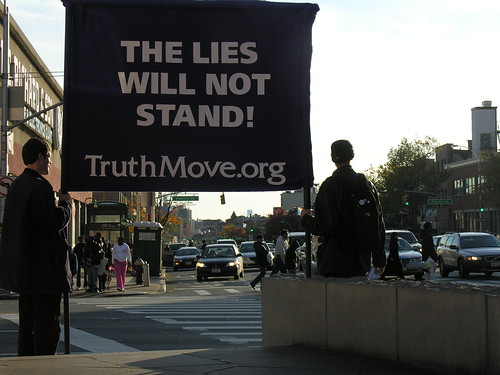
Finally, I'd like to suggest, based on my experience with TruthMove, that just a couple of thoughtful and concerned people can really have as big an impact as a much larger group of those with less focus or unity. We got started with just two people and together created an educational website, informative flyers, and a big banner sign. And with only a few more participants we have reached tens of thousands of people and certainly opened some of their eyes. It can be really surprising just how much a group of people can get done when they start out on the same page.

So rather than feeling burnt out by a group that seems incapable of adapting to new ideas or stifled by continuous disagreement, consider starting your own. It's not as challenging as you might have thought and it can be both beneficial to the movement and inspiring to others.

May 2, 2009

Wasted Time - Remote Controlled Planes

This will be a series of posts in which I address topics of interest within the movement that I believe do little to advance it's general goals. Whenever I bring up "general goals" I find that people want to debate what those are. That in itself is an issue worth it's own post.

The most widely accepted goals of the movement are to promote public skepticism about the official account, to formulate an accurate, fact based alternate history of the event, to secure a new independent investigation, and to expose those responsible and bring them to justice. There are other motivations for participation, but these are the most central.

Now, along with these goals comes a fairly diverse range of strategies for pursuing them. And my aim here is not to be critical of that diversity. Sometimes you need to try something to see if it will work, and the movement benefits greatly from diverse options being put on the table.

Within that variety some things just don't work for us.

The subject of remote control of the planes on 9/11 is one of those subjects that I believe do little more than distract us from more worthy pursuits. Here's why. We have no strong evidence that this happened. We most likely never will. And there really are more important things for us to be focusing on than questions with no answer.

There are certainly reasons to think it was possible. We know for instance that major U.S. airlines have deployed remote control systems. However, the possibility of its use is critically different from having any direct evidence that the technology was actually used. And that's a distinction that cuts right to the definition of the movement. Did it happen or not?

Nick Levis has pointed out to me (roughly) that this kind of speculation can help those with a great deal of information to determine weak points in the official story that we might benefit from exploring in more detail. Asking questions can lead to unexpected insight.

And I'm such an info nerd that I'd be as likely as anyone to talk about the latest tidbit. I might enjoy learning all sorts of details about the latest military technology and trying to fit it into how the whole operation all went down. But ... Is that really a good thing? Important?

I've tried more recently to maintain some perspective. 9/11 truth is not about me or you. It has nothing to do with what makes us feel good or fascinated or fulfilled. 9/11 truth is about our mutual dedication to the high principle of truth. People have sacrificed so much for that. We should be grateful and mindful of what they taught us. And we should express that gratitude in active ways.

For that reason, I'm suggesting that sitting around thinking about what might have happened is a potentially serious waste of our time. It might make us feel closer to some truth and yet does not in any way challenge those in power.

What can we DO?

We've had all the facts we need to promote 9/11 truth and push toward our goals since very soon after the event. And yet people continue to hope for some ultimate theory or smoking gun that will break the case wide open. We may yet see some new insight have a major impact on the mainstream consciousness. But too much time is spent not really appreciating the significance of what we already know, and know well.

And so we have to avoid the temptation to fill in the blanks on our own. Instead we should strive to be experts of the exact boundary between what is and is not known. The truth should be our goal and our method.

April 24, 2009

Avoiding Burnout - The "Big Tent"

"The 9/11 Truth Movement's Big Tent has functioned in a way that is antithetical to the process of science, as it does not recognize any process for invalidating theories." - Jim Hoffman

The big tent approach is one of the 9/11 truth movement's biggest pitfalls. This approach to activism is based on three basic premises: personal fallibility, the primacy of recruitment, and a disregard for the scientific method. In each case making people feel welcome in the movement is prioritized more highly than whether those people share core movement values, insights, and priorities.

Other social movement's such as the JFK assassination movement have been subject to the detrimental effects of this strategy and yet much of the 9/11 truth movement remains less than well informed about the present and potential problems caused by the adoption of this approach. There are even those who explicitly promote it, some of them knowing full well the detrimental effect it will have.

Many of us frustrated by the behavior of other activists and groups have dealt with those who passively or actively support the big tent strategy. Understanding a problem is the first step in dealing with it. So it's important for us to become familiar with why and how people justify their adherence to this approach.

"Everyone makes mistakes."

As 9/11 truth can take a significant psychological toll on us, we rely upon our movement peers not only for motivation but also for a certain level of emotional support. In the process we can develop feelings of affiliation and trust. No one likes to be criticized, and specifically not by people who we are turning to for a sense of shared purpose and optimism. For this reason it can be difficult to offer or accept constructive criticism.

And yet this movement requires critical thinking and a discerning approach to information and strategy. Progress is not achieved by advocating speculation or utilizing ineffective strategies. Everyone makes mistakes and so we should certainly be patient with those we trust, helping one another to develop a more nuanced understanding of the issues and more productive means of promoting our concerns.

Unfortunately, many are prone to limiting helpful critique in the interest of group solidarity. We might fear that our criticism will be viewed as disloyalty or cause a rift between people. We might feel that criticizing group leaders will undermine their authority. And yet without that criticism, factual and strategic errors will be repeated.

Our dedication to the movement must motivate us to speak up and make our concerns known. When we allow others to repeat mistakes we are participating in those mistakes. Respectful intervention is essential to movement progress.

"We need as many people as possible."

We all want the movement to grow. You can't have a movement without the people. And yet you also can't have a truth movement comprised of people who don't know what truth is, advocate concerns that greatly alienate others, or promote failing strategies. A great deal of unproductive behavior is tolerated because many believe that quantity is more important than quality when it comes to helping the movement grow.

The idea that we should have "civility & fraternal feeling towards all pro-truth voices" as Kevin Barrett has put it, is not practical or responsible. There are many reason for this, not the least of them being the fact that there are people trying to infiltrate and undermine the movement from within. When new people join our groups or discussion forums we should pay attention to their general level of sanity, their motivations, and the information they advocate. Without any sense of healthy motivations, practical strategies, and the boundary between fact and speculation we allow the movement to develop without any clear definition or boundary lines.

The idea here is not to purge the movement of those who disagree with us about specific facts or strategies. Those kinds of disagreements are healthy as they result in debate which tends to help the movement progress and adapt to changing circumstance and diverse audiences. But the movement has no need for bigots, extremists, or sociopaths. And only if we are paying attention to who we are working with will we be able to prevent these people from falsely or poorly representing the nature of our movement.

"Nothing can really be proven."

Whether due to ignorance or intentional disruption there are a number of people, websites, and groups in this movement that advocate speculation that is without logical merit or has been adequately disproven. And one of the primary methods used to maintain their inclusion in the movement is to blur the line between fact and speculation. As we can't prove that 9/11 was an inside job they suggest that anything unproven should be left on the table for public consideration.

This obscures an important fact. The primary basis for the movement's assertion of complicity or need for further investigation is very well founded documentary evidence. The movement also includes a lot of more ambiguous evidence that had not been effectively ruled out by some of the more flimsy aspects of the official story. But the assertion that we must continue to debate or worse yet promote speculation that has been effectively refuted by available facts is totally unacceptable.

The movement can't thrive without a definition. And central to the definition of this movement is an understanding and respect for empirical truth. The scientific method is key to the success of this movement as it is in our most logical reasoning that we are able to upend the official story and bypass the bias and skepticism of many of those who refute our claims. Central to the scientific method is attempting to disproves one's own hypotheses. That approach must inform movement strategy as it should be only the most well founded evidence that we put forward for public scrutiny.

I'll end as I began with a quote from Jim Hoffman.

"The fact that these values closely parallel the egalitarianism, tolerance of diversity, and coalition-building championed in populist and progressive social movements makes them difficult to criticize. However, unlike the application of these values to people in traditional social movements, the 9/11 Truth Movement's Big Tent applies them to ideas. Conflating the respect due people with the respect due ideas is a fundamental error at the heart of the Movement's failure to break into the mainstream thus far."

April 18, 2009

Wikipedia Fail - Overcoming Flagrant Bias

Since the release two weeks ago of a research paper revealing the presence of unspent thermitic material in four samples of dust collected from the collapse of the twin towers, a few of the public editors over at Wikipedia have been setting aside any objectivity they were attempting to maintain and have been very actively preventing the paper from being referenced in any way.

Cheers to Victronix for having been the movement's primary line of defense against Wikipedia editors who abuse the editing guidelines by allowing their partisan bias to directly dictate how they alter articles related to 9/11 truth. She's now been blocked from editing over this concern. You can find her thread covering this topic over on the TruthAction forum.

In summary, every time someone tries to post a link to the paper on the controlled demolition page, someone else deletes it. And the level of bias is clearly apparent when you look at the Wikipedia discussion area and see how these people are justifying their behavior. We find some real pearls of wisdom such as the following.

"There is no "hypothesis" that controlled demolition brought down the WTC. There are "conspiracy theories" that this occurred, but thats all."

This comment was made by someone recommending that the page on controlled demolition be renamed from "Controlled demolition hypothesis for the collapse of the World Trade Center" to "World Trade Center controlled demolition conspiracy theories."

This behavior is totally infuriating to those of us in the movement who struggle against mainstream denial and derision of even our most responsible skepticism toward the official account. The fact that people in positions that require a certain degree of objectivity such as scientists or journalists would not only violate that objectivity, but do so in a manner that suggests total disrespect for the logic of anyone holding the opposing view, is really surprising at times but always disappointing.

The anger and frustration we feel about that can be really draining. So it's important for us to figure out how not to let these people and their actions drag us down. Here are a couple of recommendations about things we can do to deal with this situation in a healthy way.

1) Contact the person and communicate nothing to them other than a list of facts and their sources. People with a heavy bias may not care about how they make you feel. Avoid any mention of your own assumptions or beliefs. Just hit them with facts they can't easily refute. Cognitive dissonance is a strong tactic to use against people who aren't easy to reach or reason with.

2) Contact the person and ask them a question. Insulting people gets you no where. Gathering information about these people helps the movement and makes you feel like you have the upper hand. Don't necessarily let them know you are a truther. Be friendly and calm and ask them to explain their reasoning in more detail. Get them to more explicitly reveal the basis and extent of their bias.

3) Whether you understand the root of their bias or not, keep in mind that people acting irrationally make themselves look bad. Certainly don't act irrationally in retaliation. Write down the most flagrant examples of their bias and share them with others. Spread the word that this person has undermined their own credibility. If you post this kind of thing to discussion forums, using their name in the title of your posts, it's possible with enough views that your posts will show up in the web search results for that person.

Ultimately, keep in mind that the social behavior you value such as honesty, logical reasoning, and sincere debate, are very important and that your frustration demonstrates a significant strength. Don't ever let irrational behavior allow you to question the importance of your values. It will certainly be frustrating. But know that people acting in such a self-contradictory manner understand somewhere deep down inside themselves that they aren't being honest.

(New usage of the word fail)

April 12, 2009

Ballot Initiative Reality Check

Since the NYC ballot initiative became a project that many are taking seriously, there have been a number of people in the movement, including myself, who have been expressing a number of concerns about the content of the initiative, some of those involved, and how it's being coordinated.

In brief summary, a central figure and "coordinator" until very recently was Les Jamieson, infamous for his bad judgment and uncooperative direction of ny911truth. The initiative unnecessarily specifies who the commissioners will be. The commissioners are generally supportive of 9/11 truth and likely to be perceived as having bias. One of the commissioners is Edgar Mitchell, a noted UFO enthusiast. It sets the annual budget at $10 million for a period of five years while stating that the work of the commission will not commence until funds required by the budget have been fully secured. It sets the salary for commissioners at $100,000 per year stating that they will only work part time and don't need to live locally. It provides that the commission will also pay themselves for all travel and lodging expenses in addition to their salary.

Many people, not including myself, think securing a new investigation is the ultimate goal of the movement. And in some relatively superficial ways this effort seems like our best chance yet. Many support the effort because of the involvement of reputable or respected movement figures, politicians, and family members. Some support the effort because it seems like the best thing we've got going right now. Some support it for reasons other than it's stated intention, such as increased publicity.

But how many of those people either haven't read the initiative, haven't heard of the concerns stated above, or uncritically support the effort for being a movement project? And why are many who are aware of these concerns ignoring them?

While there is something to be said for fighting a losing battle to demonstrate the strength of our principles, the problems we see so far with this effort could have been avoided. But as they weren't, does it make sense for us to support the effort as though the problems didn't exist? If these problems fundamentally undermine the potential of this effort, as I believe they do, shouldn't we be acknowledging that before more time, energy, and money are spent?

Unfortunately, in a movement about truth and free thought there are many who are subject to group think or the allure of the bandwagon. There is a very real temptation that most of us feel to support the work of others as much as we'd like them to support ours. And very often we feel that criticism will be met with something akin to questioning our allegiance to the movement. I've certainly had my allegiance questioned.

From my experience in the movement I have a lot reasonable assumptions about how this all might unfold. Most important among them is the very real possibility that as the problems begin to become more clear to people, that most will be too invested to jump off a sinking ship. And the result in that case might be a lot of frustration, infighting, and ultimately burnout for many highly invested movement participants. If you think this is the movement's purpose, think it's our best shot so far, put a lot of hope or energy into it, and then it falls apart due to preventable issues, how will you feel?

We might lose a lot of supporters if this goes sour. Or perhaps when they can't raise enough money it will just quietly be put to rest. Either way, as the idea holds some promise I consider it far better to start over with a more solid strategy and initiative than to work with inadequate tools to achieve what for many is one of our most important goals.

Please contact NYCCAN to express any concerns you might have.